


wibas
Together we will make your organization more capable of delivering.
We offer many years of experience in accelerating product development processes and shortening lead times - for service organizations as well as in development and production. Our expertise lies in the development and implementation of sustainable organizational improvements that meet the specific requirements of your industry.
Our services


With a clear focus on improving delivery capability, we support you with customized workshops, practical training, targeted advice and long-term support;
We support the concrete implementation of identified measures and assist your organization in permanently anchoring new approaches. Through our step-by-step and results-oriented systemic change management, we ensure that improvements deliver measurable results and support long-term growth.
Building blocks of high-performing organizations
What is important for high-performing organizations? There are a number of building blocks to focus on when increasing delivery capability:

Contact us or make an appointment directly with our customer team. We look forward to developing your organization together.







Customer Stories

Agile transformation at dwpbank
Support for a major agile project and deployment of interim agile coaches to speed up the delivery of solutions and services at dwpbank.

Product development at Merck
Establishment of a strategically aligned agile product development process and team support through agile collaboration models.

Strategy development at E-T-A
Development of a self-organized team, dealing with changing team composition and evolutionary introduction of Kanban.

Introduction of SAFe® at SMA
Experience report on the introduction of SAFe at SMA - challenges, steps taken and positive effects for a company in the energy sector.

Change in the chemical industry
Establishment of an agile way of working as well as stage planning and introduction of a portfolio level to avoid continuous overload.
Upcoming events
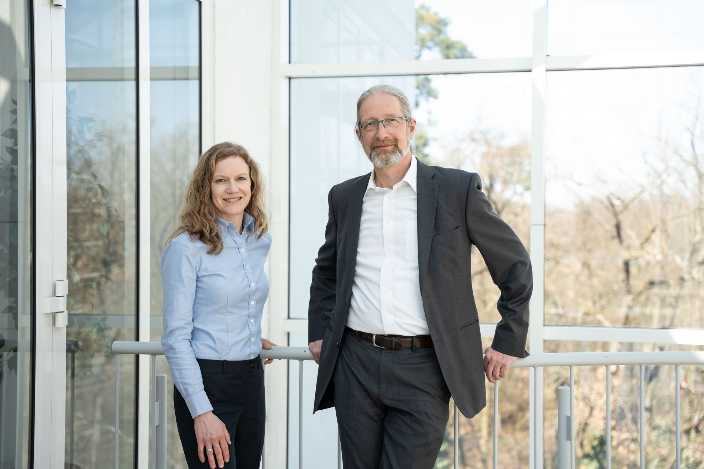
25.09.25 wibas evening event: Delivery capability under given framework conditions
In our evening events, we present individual building blocks of deliverable organizations. This module is about how to deal with given framework conditions in a changing environment and what attitude you should adopt. From 17:30-19:00. Missed the first module? Don't worry, you can join in at any time.
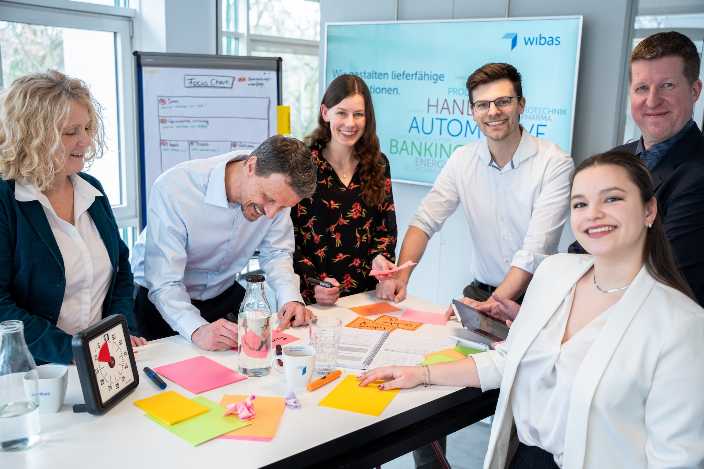
06.08.25 Kanban consultation hour
Do you have questions about Kanban or workflow? You can find answers to your questions here. Our colleague Astrid Meyser offers a Kanban consultation hour every first Wednesday of the month. Here you can discuss all your questions about Kanban, the introduction or establishment of a system, key figures or potential for improvement.
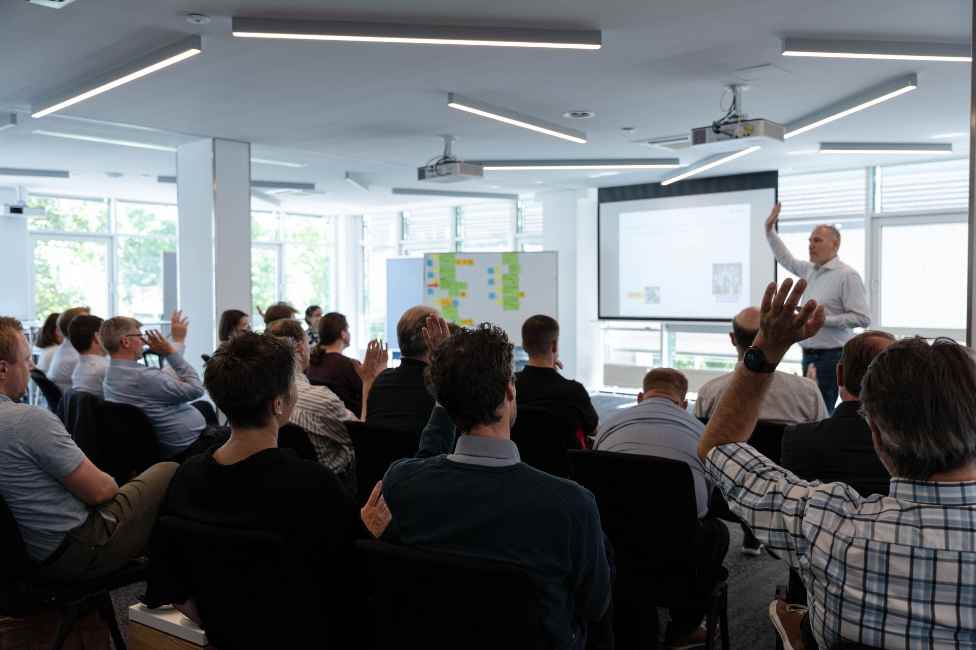
18.11.25 Meetup: Agility in the development & production of physical products
n November it's time again: our Meetup Agility in the development and production of physical products, which we held for the first time last year with many participants, will take place for the 3rd time in Darmstadt from 1-6 pm. Participation is free of charge.

30.09.25: VKU Stadtwerke Congress in Mainz
This year we will be attending the VKU Stadtwerkekongress in Mainz from 30.09. to 01.10.25. This is the central industry get-together for innovation, exchange and inspiration. Every year, decision-makers from the municipal sector meet there to discuss current challenges and present practical solutions. We look forward to seeing you at our stand.
Tools and assets

Self-Assessment Change
Evaluate your own change project. You will receive an assessment of the success factors for a change. You will also receive recommendations on which measures can make your change more sustainable and effective.

Self-assessment of delivery capability
Evaluate the delivery capability of your organization. You will receive recommendations on which measures can support your organization on the way to more efficiency, more effectiveness and more customer orientation.

Survey on the topic of process improvement
Take part in a short survey on how your organization deals with process improvement. Once a month, we will give away our bestseller: "Organization in a digital age."

Toyota Lean Leadership: Leadership in Complexity
The Toyota Lean Leadership Model helps managers to survive in the VUCA world with clarity, learning ability and agility. Read this recent article by our colleagues Tina Eisoldt and Caroline Haußmann in Informatik Aktuell.
Training courses


Early-bird
when booking 4 weeks before the start of the training

Early-bird
when booking 4 weeks before the start of the training

We design customer-oriented organizations that have the capability to deliver
Delivery capability and customer orientation are decisive features for the success of any company.
Our Topics
We design deliverable organizations with the appropriate tools. Here you will find a selection of our tools and topics.
Consulting
We are a management consultancy. We coach teams, advise executives and design transformations.
Publications
Our publications and materials for your work in the 21st century.
Academy
We also pass on our knowledge through training courses. In our academy, you will find training courses on Scrum, Kanban, agile leadership, scaled agile and much more.
Jobs
Work with us. Find jobs that are shaping the companies of tomorrow. Expect an extraordinary team. Apply now.
About us
New Consultancy for New Work: We are a modern consultancy for work and business in the 21st century.
We are always there for you:
wibas GmbH


undefined